




DSHA, Delaware Sea Grant to offer disaster housing recovery and resiliency planning workshops for Delaware municipalities

Dover, Del. May 22, 2026 — The Delaware State Housing Authority (DSHA) is partnering with the University of Delaware’s Sea Grant program to offer Delaware municipalities free expertise on post-disaster housing recovery and resiliency planning.
During workshops throughout the state, staff will lead participants through a mapping exercise to identify high-risk areas, flood plains repeatedly hit by storms, and potential interim housing locations and parcels of land in their towns and cities. Workshops are geared toward local and county planners, planning commissioners, elected officials, and community development, land-use, permitting, and inspection professionals.
A half-day workshop was held earlier this year for the nine participants in DSHA’s disaster housing recovery technical assistance pilot program. They found it so insightful that DSHA and Delaware Sea Grant are making it available at no cost to the rest of the state.
“The mapping exercise is a foundational and practical steppingstone to disaster housing preparedness and comprehensive planning for communities on post-disaster preparedness,” said DSHA’s Emergency Management Coordinator Vanessa Cullen. “It serves this purpose by helping local jurisdictions identify repetitive loss properties and visualize where vulnerable populations are located in comparison. In turn, local governments can use this information to prioritize pre-disaster actions that help prepare for and expedite housing recovery after a disaster.”
Maps can be used to identify areas that have a high concentration of vulnerable populations such as senior citizens and can pinpoint less densely populated or less developed areas where post-disaster interim housing could be placed, taking into consideration road accessibility and utility hookup capabilities.
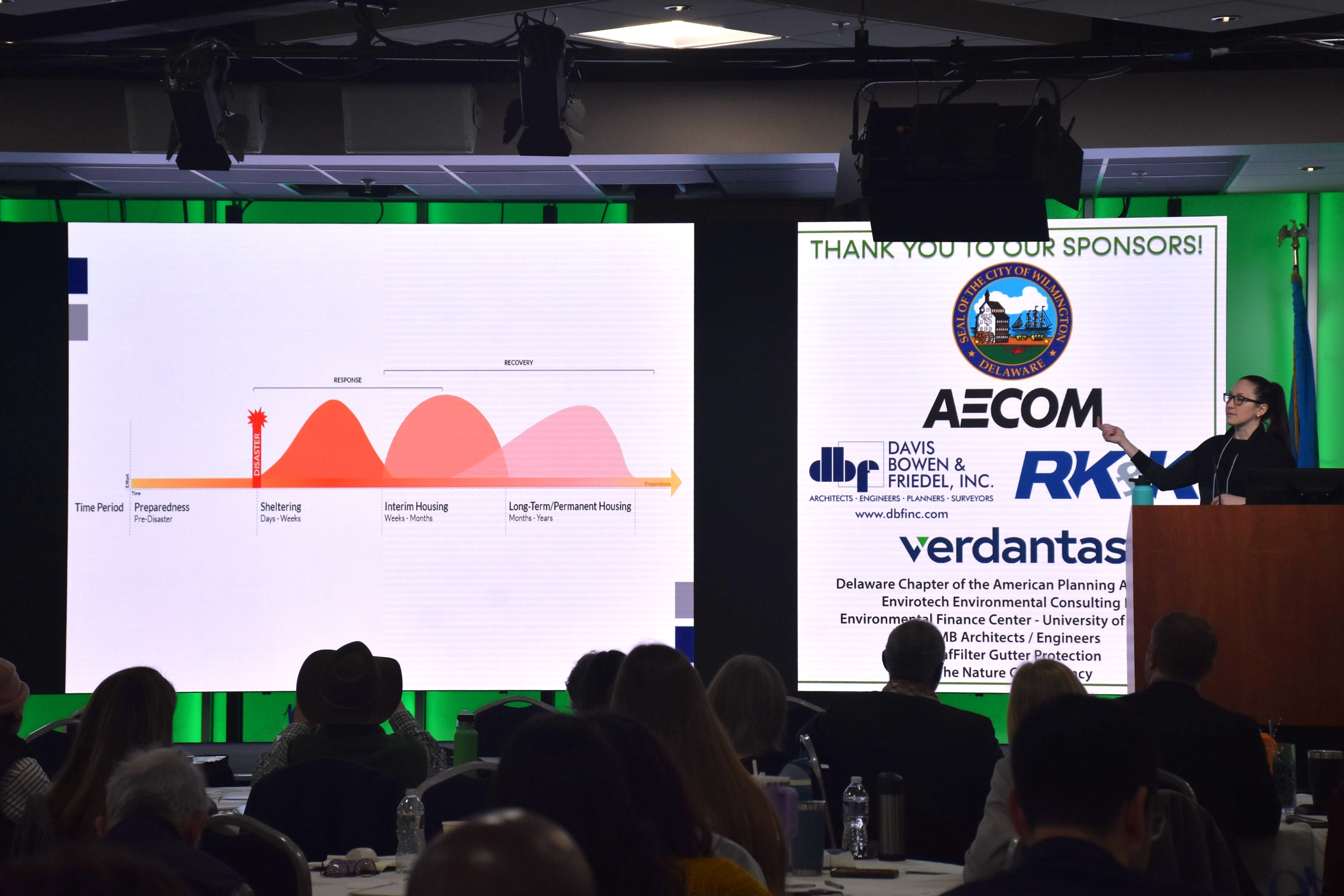
Delaware Sea Grant Coastal Hazards Specialist Danielle Swallow leads the workshop with Cullen. She said the workshop gives municipalities and counties tools to make planning ahead for disasters, especially weather-related disasters caused by climate change, more effective.
“A community’s resilience depends in part on how well the community regains functions and quality of life essentials, including housing and food, after a disaster. If they can do things now to help them regain those important functions sooner, it’s less time they will spend after the disaster finding stable housing for displaced residents and getting back to jobs and normal activities,” Swallow said.
At least one workshop is to be held in each county by the end of the year, depending on interest.
Post-disaster housing recovery and resiliency planning are timely issues, as hurricane season starts June 1 and lasts until Nov. 30. As the lowest-lying state in the U.S., Delaware faces severe risk of impacts from hurricane conditions. Storm surge, flooding, gale-force winds, beach erosion, and mass power outages can impact coastal regions and create high risks for public safety, businesses, and homes throughout the state.
For more information about the workshop or to request one in your county, please contact Vanessa Cullen at vanessa.cullen@delaware.gov, or (302) 739-4263.