

Partners
Legislative Partners
Answers, contacts, data, and materials to help legislators and their staff assist Delawareans with housing questions.
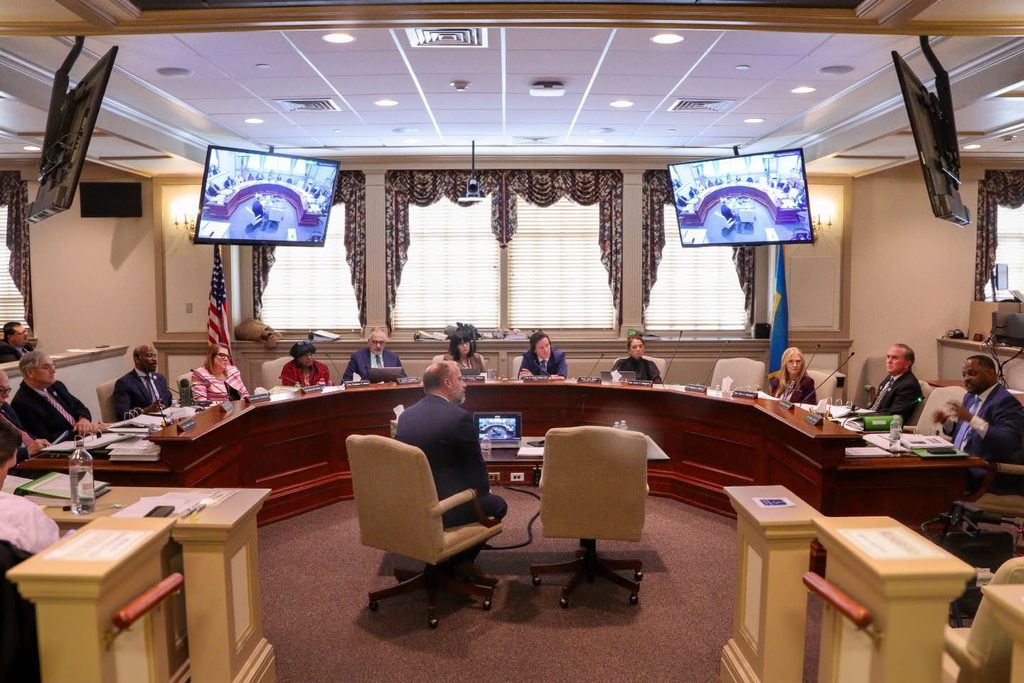
A one-stop resource for legislators and their staff — quick answers to the housing questions constituents raise most, the Housing Delaware contacts and outside agencies to refer them to, and the data and materials to share in your district.
I’m looking for…
Housing data & reports
- Housing Terms & Definitions
- 2023 Housing Needs Assessment
- Housing Delaware 2025 Annual Report
- Housing Delaware Strategic Plan
- DDD StoryMap
Housing task force information
- Delaware Interagency Collaborative to End Homelessness
- Disaster Housing Task Force
- Affordable Housing Production Task Force
2025 housing data
A snapshot of Housing Delaware’s impact across Delaware over the past year.
Housing Delaware frequently asked questions
The questions legislators and their staff hear most from constituents, with the offices and resources to refer them to.
- Main Office
18 The Green
Dover, DE 19901
Phone: (302) 739-4263
Toll-free: (888) 363-8808 - Public Housing Authority Office
500 W. Loockerman Street, Suite 104
Dover, DE 19901
Phone: (302) 739-7416 - Wilmington Office
820 N. French Street, 10th Floor
Wilmington, DE 19801
Phone: (302) 577-5002
Our mission is to provide and assist others with quality, affordable housing opportunities and appropriate supportive services to low- and moderate-income Delawareans.
Housing is considered “affordable” if the household pays no more than 30% of its gross monthly budget on housing costs (rent plus utilities for tenants, or mortgage plus taxes, insurance, and utilities for homeowners). If a household pays more than 30% of their budget on housing costs, they are considered “cost-burdened,” and the housing is not considered affordable.
Subsidized housing is housing that is supported by a government subsidy in order to ensure affordability for the occupant. Generally, there are four types of subsidized housing: Public Housing; Housing Choice Voucher (Section 8 Voucher); Site-Based Subsidized Housing; and Tax Credit sites.
- Public Housing: These are apartment complexes owned and managed by a Housing Authority. The tenant pays a portion of the rent each month, and the federal government pays the remainder of the rent.
- Housing Choice Voucher: Formerly called Section 8 vouchers, voucher holders locate their own rental unit (apartment, house, condo, townhouse, manufactured home). The voucher holder pays a portion of the rent each month, and the voucher pays the remaining portion.
- Subsidized sites (site-based Section 8, USDA Rural Development, Rental Assistance) offer rents based on household income in accordance with federal regulations. The tenant pays a portion of the rent each month, and the federal government pays the remaining portion. The majority of these sites are privately owned and managed, although subsidized by the federal government. Unlike a Housing Choice Voucher, the tenant cannot take the subsidy with them when they move out of a site-based subsidized apartment.
- Tax Credit sites, though not subsidized by the federal government, are considered affordable. They offer lower than market rate rents to families and individuals with modest incomes. The tenant is required to pay the full rent and utilities and must have a minimum income to qualify (as opposed to subsidized housing, which has provisions for those with no regular income).
Offered by Housing Delaware in Kent and Sussex Counties, Public Housing and Housing Choice Vouchers provide safe, decent, affordable rental housing and access to supportive services for low-income families. The Housing Choice Voucher program offers rental assistance to eligible low-income individuals and families to rent privately owned dwelling units from participating landlords. Housing Delaware administers 900 vouchers and 500 units of public housing at ten public housing sites.
Note: Program participants, except the elderly or people with disabilities, must also be enrolled in the Moving to Work (MTW) program.
- Constituents should contact the Attorney General’s Consumer Protection Unit at (800) 220-5424.
- The Delaware Community Legal Aid Society has answers to many common landlord/tenant questions on their Tenants’ Rights page.
- Any person or family who is homeless and in need of assistance should call 2-1-1. They will then be connected to Housing Alliance Centralized Intake, or call directly at (833) 346-3233 to be referred to appropriate services.
- All Delaware programs serving homeless families and most programs serving homeless individuals require a referral from the centralized intake system. Assistance accessing centralized intake is also available at the State Service Centers.
- Constituents should contact the Division of Human & Civil Rights or legal service non-profits like CLASI.
- The Division of Human & Civil Rights has information and resources regarding Fair Housing on its Fair Housing Information Center page.
- The Delaware State Housing Authority has partnered with AffordableHousing.com to simplify the process of finding affordable rental properties.
- Constituents may visit Delaware.AffordableHousing.com to apply.
The LIHTC was created in 1986 to encourage private/public investment to preserve and construct new affordable rental housing. Alone and in combination with tax-exempt private activity bonds, the LIHTC has been the most productive source of affordable housing financing in the nation’s history. Housing Delaware receives an annual tax credit amount and awards credits annually through a competitive process. The awards are based on criteria outlined in Housing Delaware’s Qualified Allocation Plan (QAP). The equity raised through the tax credit investment makes it possible for developers to attract the financing needed to create or restore low-income rental housing.
Tax credit sites offer lower than market rate rents to families and individuals with modest incomes. The tenant is required to pay the full rent and utilities and must have a minimum income to qualify (as opposed to subsidized housing, which has provisions for those with no regular income). Specific income limits are determined based on family size and county location of the unit. Constituents should visit DelawareHousingSearch.org for rates and availability.
Housing Delaware does not have a role in manufactured housing. Those issues would be handled by the Department of Justice and the Manufactured Housing Relocation Authority.
- We’re committed to meeting our constituents where they are and appreciate any opportunity to work with our partners around the state.
- If you’d like to request a Housing Delaware staff member to speak at your event, deliver an in-person presentation, or participate as a vendor, please email the details of your request to Ashley Dawson.
Housing Delaware contact list & useful links
Where to point constituents for common homeownership, federal, and local housing-authority questions.
- Website: https://www.destatehousing.com/mortgages/
- Phone: (302) 577-5002
- Website: hud.gov/delaware
- Phone: (302) 573-6300
- Wilmington Housing Authority
Website: whadelaware.org
Phone: (302) 429-6701 - Dover Housing Authority
Phone: (302) 678-1965 - Newark Housing Authority
Website: newarkhousingauthority.net
Phone: (302) 366-0826 - New Castle County Housing Authority
Website: housing.nccde.org
Phone: (302) 395-5600
Marketing materials & social media sample posts
Ready-to-share handouts for your district and social channels.
Housing Delaware 101 webinars
An overview of DSHA’s programs and services — slides and a recorded session.
Questions about this program?
Contact the Housing Delaware Community Relations team for help assisting your constituents with housing questions.
- (302) 739-4263
- Toll-free (888) 363-8808
- Send an email